Omar Abdullah Blasts Mustafizur Rahman’s IPL Exit — And Cricket’s Power Game Just Got Loud!
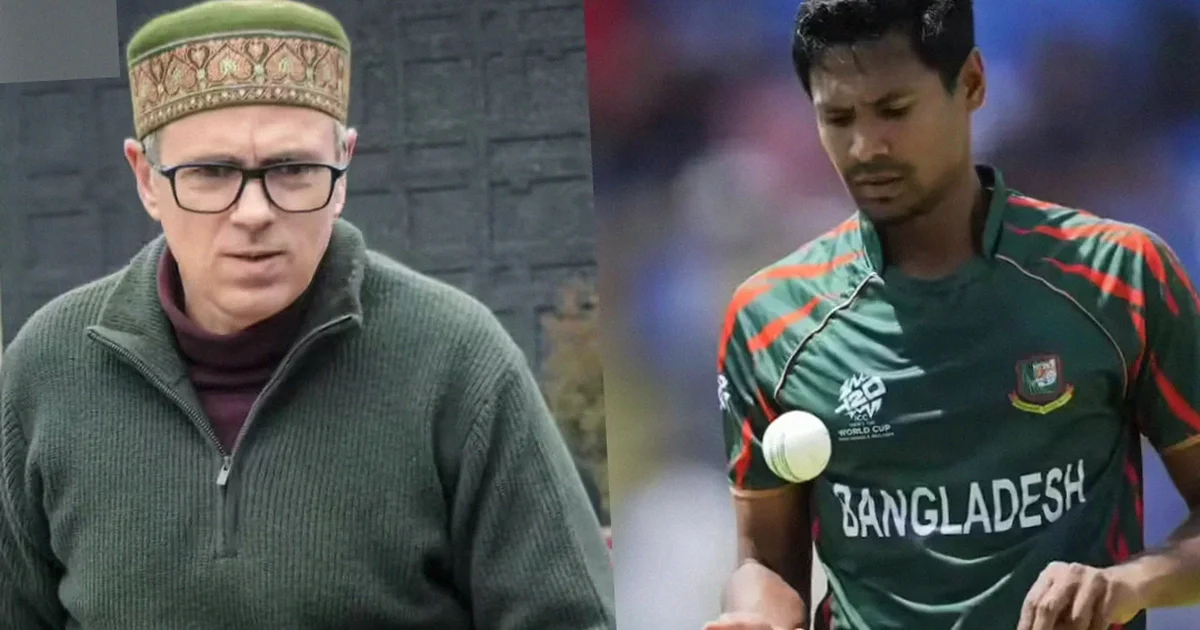
The IPL is supposed to be about skill. Pure skill. The best vs the best, under lights, with the ball flying, crowds roaring, and careers flipping in a single over.
But then this happens. Mustafizur Rahman—Bangladesh’s cutter king, a man who makes batters feel like they’re playing in the corridor of uncertainty even in a T20—gets pushed out of the IPL conversation, and Jammu & Kashmir chief minister Omar Abdullah fires a question that hits like a bouncer: “What is the fault of the player?”
And suddenly it’s not just about a left-arm seamer. It’s about what cricket wants to be.
Section 1: Background/Context
Mustafizur Rahman’s story has always been box-office. A left-armer with variation for days, a guy who can go from full and fast to dead-slow cutters without the batter reading the hand. He’s built for T20 chaos. The format rewards deception, nerve, and that delicious last-over swagger—exactly where Mustafizur lives.
So when he’s shown the door, the reaction isn’t quiet. Omar Abdullah steps in and questions the logic of removing a single player when the bigger issue being whispered around is strained India-Bangladesh ties. And that’s the heart of the storm: if politics is the backdrop, then the player becomes the headline casualty.
And here’s the thing—cricket’s never been just cricket. It’s always carried flags, feelings, and front-page drama. But fans still want the on-field stuff to stay sacred. They want sixes. They want yorker length. They want absolute carnage with the bat and CRUCIAL wickets at the death. Not selection decisions that feel like they’re coming from somewhere else entirely.
Zoom out further and you see how global cricket keeps colliding with off-field narratives. Administrators shape eras. Senior figures influence direction. Former players become power brokers. Take Hugh Morris, for example—an opening batter who played three Tests for England in 1991, then moved into the admin world as a senior figure. That’s a reminder that cricket decisions aren’t only made by people holding bats and balls anymore.
And in the women’s game, storylines are exploding too—Smriti Mandhana becoming the second Indian woman to a huge career landmark, behind Mithali Raj, who still sits tall with 10,868 runs. That’s a separate universe of achievement… but it feeds the same big theme: cricket is growing, global, emotionally charged—and every decision echoes louder than ever.
Section 2: Main Analysis (the drama, the why, the chaos!)
This is where it gets spicy. Because Mustafizur Rahman’s IPL exit isn’t just a roster move—it feels like a message, and that’s why Omar Abdullah’s line lands so hard.
A player’s job is simple: train, perform, win games. Mustafizur does that. A franchise’s job is also simple: pick match-winners. Mustafizur can be a match-winner in two deliveries—one cutter that grips, one skiddy length ball that kisses the edge. So why does it feel like the decision is being judged through a totally different lens?
And that’s the danger zone. Because when fans start asking “Is it cricket reasons or non-cricket reasons?” the league’s shine takes a hit.
But here’s the counterpunch: franchises also live in the real world. They deal with availability, travel, clearances, schedules, and the constant “will he/won’t he” of international commitments. And when geopolitics heats up, uncertainty follows players around like a shadow.
Still… must the player pay for it?
That’s why Abdullah’s framing matters. It’s emotional, sure. But it’s also logical. If the issue is diplomatic tension, it isn’t Mustafizur Rahman’s personal act. He’s a cricketer. Not a negotiator.
And the IPL, for all its glitter and fireworks, sells itself as a merit stage—where anyone can come in and start smashing it to all parts. Where bowlers can become cult heroes with one insane spell. Where a guy can go from “who’s that?” to “build the statue!” in a month.
Mustafizur fits that mythology. Which makes his exit feel like the script got ripped up mid-season.
And while we’re here—this isn’t isolated. Look at selection calls around the world. Ryan Rickelton gets left out of South Africa’s most recent T20I squad, with Quinton de Kock in the frame and the World Cup looming. That’s not politics—that’s competition and planning. Brutal, but clean. Cricket logic.
But Mustafizur’s situation doesn’t read as clean to many fans, because the surrounding noise is so loud.
And then there’s the reminder that cricket careers are full of weird turns and sudden shifts. Doug Bracewell, a seam-bowling allrounder, once grabbed nine wickets in New Zealand’s famous Hobart Test win in 2011—one of those “how did he do that?!” performances that live forever. Careers can pivot on moments. Leagues can pivot on decisions. And fans never forget the ones that feel unfair.
Section 3: Stats & Data (quick snapshot)
Here’s a tight look at the key factual touchpoints sitting around this whole debate:
| Name | Role | Key Detail | Why It Matters Right Now |
|---|---|---:|---|
| Mustafizur Rahman | Bangladesh left-arm seamer | IPL exit questioned by Omar Abdullah | Raises fairness + player accountability debate |
| Omar Abdullah | J&K chief minister | Asked “What is the fault of the player?” | Turns a roster call into a public conversation |
| Hugh Morris | Former England opener, administrator | Played 3 Tests in 1991 | Shows how cricket power often shifts to admin rooms |
| Smriti Mandhana | India batter | Second Indian woman to a major landmark | Signals women’s cricket scale and star power |
| Mithali Raj | India legend | 10,868 runs | Benchmark that still defines Indian batting greatness |
| Ryan Rickelton | South Africa batter | Left out of recent T20I squad | Selection pressure in a World Cup cycle is ruthless |
| Quinton de Kock | South Africa wicketkeeper-batter | In the picture with World Cup next | Big names change team balance instantly |
| Doug Bracewell | NZ seam-bowling allrounder | 9 wickets in Hobart Test win (2011) | Reminder: bowlers can steal headlines in one match |
Section 4: Expert Opinion / Tactical Breakdown
Let’s talk pure cricket, because that’s where Mustafizur Rahman’s value screams.
In T20s, batters want pace-on. They want rhythm. They want to line you up and start going big. Mustafizur’s entire brand is denying that comfort. He doesn’t just bowl; he interrupts.
What makes him dangerous in IPL conditions?
- Cutter control: He can take the same release and change the outcome. Batters swing for a slot ball and end up dragging it off the toe-end.
- Death-overs nerve: The best death bowlers don’t panic when the crowd is begging for sixes. They hit yorker length, then go wider, then back into the stumps. Middle and leg becomes a trap when the batter is over-committing.
- Match-up menace: Left-arm angle plus change-ups means right-handers can’t just “set and forget.” One misread and it’s a dolly to deep midwicket.
And if you’re building a T20 side, that’s gold dust. Because on flat decks, everyone can bat. But not everyone can bowl when it’s 18 needed off 6 and the batter is threatening to send it into orbit.
Now stack that against the idea of removing him for reasons that don’t feel cricket-first, and you see why fans get heated.
Also, this is where leagues need to be careful. Because the IPL’s magic is trust: trust that the best players will be on the park, and the drama will be decided by skill. The moment fans think the game is playing for the draw off the field, the vibe changes.
Section 5: What This Means for Cricket
This moment is bigger than one player. It’s a flare in the sky.
1) Players are becoming symbols—whether they want to or not.
Mustafizur Rahman didn’t ask to be a talking point in a political weather system. But it can happen anyway. That’s tough on athletes, especially in a league as loud as the IPL.
2) Cricket’s leadership layer matters more than ever.
The Hugh Morris arc—player to senior administrator—is a reminder that key decisions often come from boardrooms, not dressing rooms. The modern game is run as much by policy as by performance.
3) The global game is squeezing everyone.
Selection calls like Ryan Rickelton missing out while Quinton de Kock looms show how ruthless planning gets when a World Cup is next on the calendar. And in that squeeze, leagues, boards, and players clash over priorities.
4) Women’s cricket is raising the stakes of “fairness” too.
Smriti Mandhana hitting a landmark as the second Indian woman to do it—behind Mithali Raj’s 10,868-run mountain—shows how the sport is expanding. As more eyes come in, more scrutiny follows. Decisions in any league, men’s or women’s, get judged harder and faster.
And that’s the new era: every call is public, every move is debated, and every omission can spark a week-long firestorm.
Cricket’s a game of moments. But it’s also a game of messages. And this message has landed with a thud.
Closing thought: If the sport wants to stay pure chaos on the field—six-hitting, wicket-taking, last-over madness—then it can’t afford too many headlines where fans are left asking why the cricket part feels secondary.