Rohit Sharma and Virat Kohli’s Next Act: Keep the Legends Playing, Let Hardik Pandya Light the Fuse in 2026!
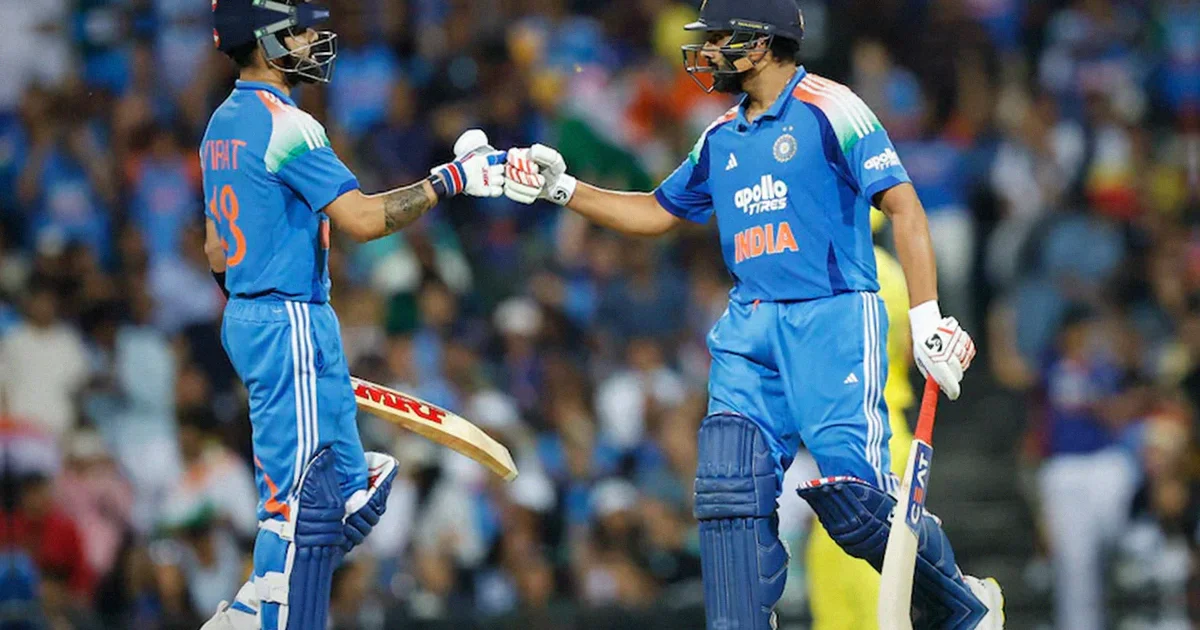
The new year’s about to kick the door down. Airports. Kit bags. Quiet whispers that suddenly turn into a roar. And right in the middle of it all? Rohit Sharma and Virat Kohli—two names that still make bowlers check the field twice and captains sweat through their plans. Add Hardik Pandya cruising into India’s first international series of 2026 with the spotlight following him, and you’ve got pure cricket drama loading…
One question keeps bouncing around louder than a top-edge over fine leg: should Rohit Sharma and Virat Kohli keep going?
If they’re still enjoying it, why on earth not?
This isn’t about nostalgia. It’s about impact. It’s about whether these two are still setting the tone, still smashing it to all parts, still capable of turning “tricky chase” into “absolute carnage” in 12 balls flat. And with a former World Cup winner basically saying, “Let them play if the fire’s still burning,” the conversation isn’t slowing down—it’s speeding up.
---
Section 1: Background/Context
Rohit Sharma and Virat Kohli sit in that rare stratosphere where their presence changes the temperature of a match. Not just for India—globally. Because every touring side plans for them like they’re weather events. You don’t “prepare” for them. You brace.
And 2025 only made the story louder for Rohit.
It was a statement year. Big scores, records tumbling, and a massive rankings moment—Rohit reaching the top-ranked ODI batter spot in the ICC rankings for the first time. That’s not a soft achievement. That’s the kind of thing that screams: still hungry, still sharp, still going big.
Kohli’s narrative, meanwhile, is different but just as spicy. There’s workload, scheduling, and the reality that top players don’t need to play every domestic red-ball game to prove a point. That was underlined when it was confirmed he wouldn’t be turning out for Delhi against Railways on Tuesday. Not a scandal. Not a crisis. Just modern elite sport—pick the right moments, protect the body, keep the edge for the battles that matter most.
And then there’s Hardik Pandya—India’s walking highlight reel and momentum magnet—spotted at Jamnagar Airport on January 4, 2026, alongside his girlfriend, model Mahieka Sharma, right as India’s first international assignment of the year comes into view. It’s a small snapshot, but it tells you the machine is moving again. Tours begin. Pressure rises. The show’s back.
So you’ve got three megastars at three different points of the same question: how do you balance longevity, form, fitness, and pure love for cricket?
---
Section 2: Main Analysis (the thrill, the tension, the reality!)
Here’s the truth: cricket doesn’t wait. Not for legends, not for timelines, not for anyone’s “perfect ending.”
But it does reward obsession.
And if Rohit Sharma and Virat Kohli are still enjoying the grind—nets, travel, bubble life, the endless analysis, the noise—then their continued presence is a cheat code for India’s batting depth and for world cricket’s storyline.
Because what do these two still bring?
Rohit brings chaos with control.
That mix is terrifying. When he’s on, the ball isn’t just being hit… it’s sending it into orbit. The field spreads, the bowler panics, and suddenly the match is on the back foot. He can play the soft hands. He can pick gaps. And then—bang—he launches the kind of pull shot that turns respectable totals into “good luck chasing that, mate.”
Kohli brings chase-pressure brutality.
Even when he’s not playing every domestic fixture, his brand is still built for the sharp end. The crease becomes his office. The target becomes personal. And the opposition starts feeling like every single dot ball is pointless because he’ll just glide two boundaries in the next over and reset the entire equation.
But.
And it’s a big but.
The modern calendar is savage. T20 leagues everywhere. International series stacked. Fitness becomes a skill, not a bonus. That’s why you see smart workload calls—like Kohli skipping Delhi vs Railways. It’s not dodging cricket; it’s choosing the right cricket.
Now throw Hardik Pandya into the mix.
Hardik isn’t just a player. He’s a match mood. When he’s fit and firing, he changes the tempo instantly—ball in hand, bat in hand, vibes on max. Seeing him travel with the season beginning again is a reminder: 2026 starts fast, and India’s engine room is already humming.
Here’s what’s wild: if Rohit and Kohli stay, and Hardik is fully switched on, India can run line-ups that are flat-out unfair in white-ball cricket. Left-right combos, anchors who can explode, finishers who don’t blink. That’s how you win global tournaments.
And yes—this is bigger than India.
The sport needs its icons. Not as museum pieces. As active threats.
Because when Rohit’s timing is crisp, and Kohli is hunting a chase, and Hardik is throwing down a last-over smackdown… neutral fans don’t change the channel. They pull friends into the room. That’s what cricket’s competing for in 2026: attention, energy, moments.
---
Section 3: Stats & Data (quick snapshot)
Not every story needs a spreadsheet. But a few hard markers matter here—especially when we’re talking longevity and relevance.
| Player | Key Verified 2025/2026 Detail | Why It Matters |
|---|---|---|
| Rohit Sharma | Reached top-ranked ODI batter in ICC rankings for the first time in 2025; also piled up big scores and records | Confirms elite output in the format that defines major global events |
| Virat Kohli | Not playing Delhi vs Railways (confirmed by coach Sarandeep Singh) | Signals workload management; prioritizing key fixtures |
| Hardik Pandya | Spotted at Jamnagar Airport on Jan 4, 2026 ahead of India’s first international series of the year, with Mahieka Sharma | The white-ball core is mobilizing; the season’s intensity is back instantly |
Short. Sharp. Telling.
---
Section 4: Expert Opinion / Tactical Breakdown
The biggest takeaway from the “keep playing if you’re enjoying it” line isn’t sentimental—it’s tactical genius.
Enjoyment matters because it’s tied to clarity.
A veteran who’s mentally in love with the contest reads lengths quicker, reacts cleaner, and stays calmer when the crowd is screaming and the required rate is climbing. A veteran who’s just hanging on? That’s when footwork slows and shots get forced.
So how do Rohit and Kohli fit tactically in 2026?
Rohit Sharma’s role: powerplay boss, spin destroyer
If Rohit keeps his ODI rhythm from 2025 rolling, he’s still the guy who can win you a match in the first 10 overs. Bowl full? Picked up. Bowl short? Pulled into the stands. Miss your line by a fraction? That’s smashing it to all parts. And once spinners come on, he’s got that calm brutality—one step, one swing, and the bowler’s spell is done.
Virat Kohli’s role: the chase architect
Kohli doesn’t need to prove himself in every domestic game because his main value is still the pressure role—the “we’re two down early, now what?” role. He turns messy chases into calculated hunts. He drains the bowling, rotates the strike, and then explodes late. It’s not always loud. But it’s deadly.
And if you’re an opposition captain, you know the nightmare: you think you’ve got him tied down, and then he pulls out something like a reverse sweep to flip the field and make your best bowler look ordinary. Just one moment. That’s all it takes.
Hardik Pandya’s role: the tempo grenade
Hardik is the bridge between eras—modern T20 aggression with enough experience to handle big tournament tension. If he’s firing, India’s middle overs don’t just survive; they attack. That’s where matches get won now. Not just in the slog. In the squeeze. In those overs where teams usually play safe, Hardik goes hunting.
And when these three align? That’s how you build totals that break scoreboards—and chases that crush souls.
---
Section 5: What This Means for Cricket
This isn’t only about whether two legends keep playing. It’s about what global cricket looks like when icons refuse to fade quietly.
If Rohit Sharma and Virat Kohli remain active and genuinely motivated, you get:
- Higher competitive standards: Young batters aren’t handed roles—they fight for them.
- Bigger series pressure: Every tour becomes must-watch, because legends still swing results.
- Global relevance: Cricket’s biggest names still show up in the biggest moments. That matters for fans from Cape Town to Kingston, from Lahore to London.
But there’s a flip side too.
If workload management becomes the norm—like Kohli skipping Delhi vs Railways—you’ll see more selective appearances. More targeted peaks. Less “play everything.” That’s not a weakness. That’s evolution.
And Hardik Pandya’s presence in early 2026 movement is key because he represents the next layer of star power: players who live in all formats, can flip games in five minutes, and carry a team’s energy.
So the real win for cricket?
A 2026 where veterans are still dangerous, and the new-age match-winners are already kicking down the door.
More drama. More moments. More nights where someone is sending it into orbit and the stadium loses its mind.
---
Closing thought: If Rohit Sharma and Virat Kohli are still loving the battle, the sport’s better with them in it—because legends who still burn don’t fade… they explode.
---