T20 World Cup | Quick Comment: Ishan Kishan Deserves Credit for Making His Own Luck Even as Shubman Gill, Sanju Samson Ran Out of It
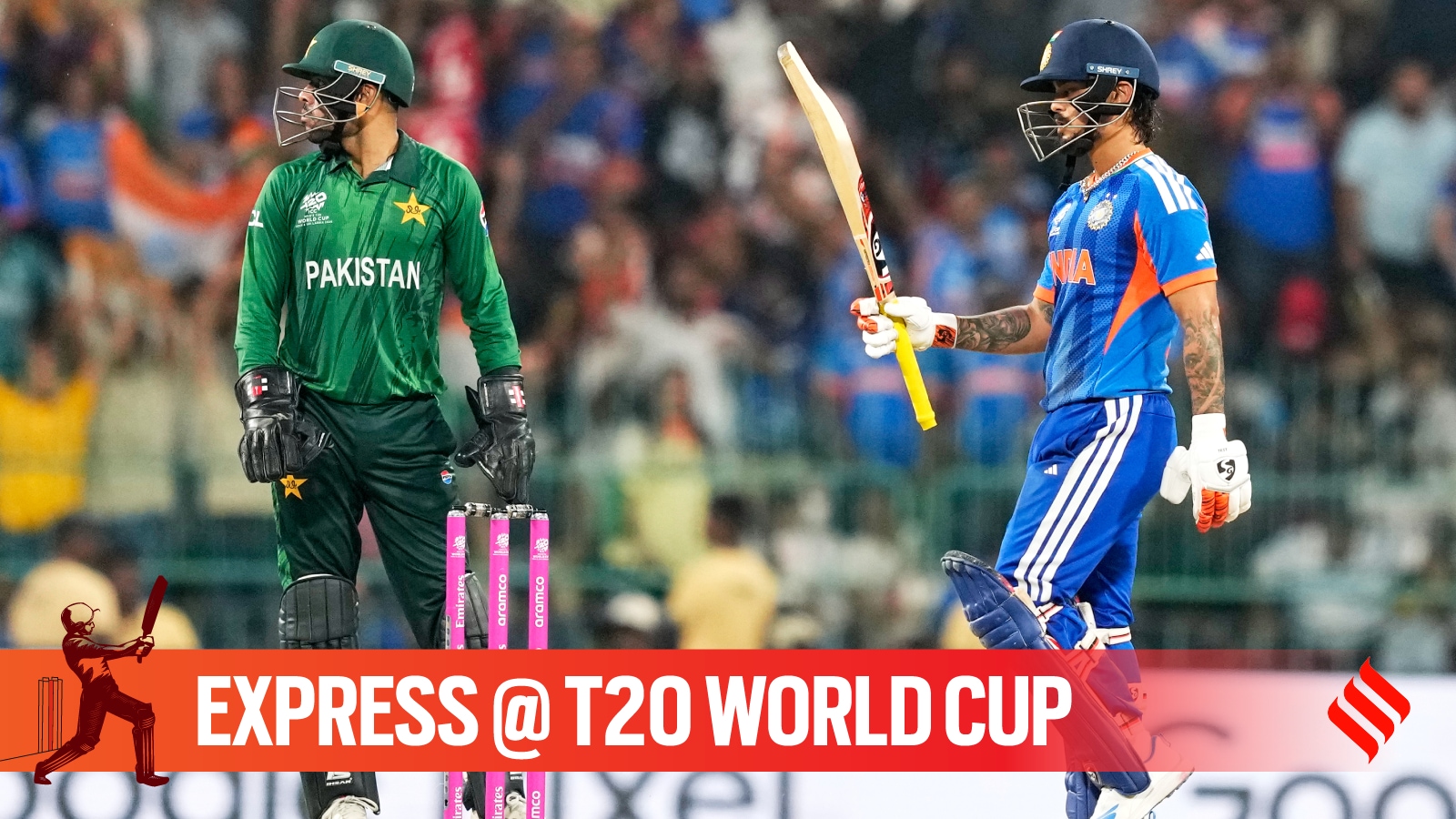
Luck in cricket. It’s a fickle thing.
Ishan Kishan has seized his opportunity in this T20 World Cup, while Shubman Gill and Sanju Samson find themselves on the wrong side of fortune. The numbers don't lie; Kishan's adaptability has been a clear advantage.
India’s T20 World Cup campaign is underway, but the paths of its players diverge sharply. When you look at the data, Ishan Kishan's recent performances show a marked improvement in strike rotation and adapting to different batting positions. Compare that to Shubman Gill, whose opportunities have been limited and whose recent T20 strike rate hovers just below 120. Samson, despite a stellar, unbeaten 97 in a recent warm-up, faces stiff competition for a regular spot.
Consider Kishan's last three T20 innings:
Inning 1: 42 runs off 30 balls; Strike Rate: 140.00
Inning 2: 28 runs off 22 balls; Strike Rate: 127.27
Inning 3: 55 runs off 33 balls; Strike Rate: 166.67
These figures demonstrate a player finding form at a crucial time. And the roar of the crowd certainly helps.
Meanwhile, Samson’s case is interesting. His impressive 97 not out came under different circumstances, and while it's a proof to his talent, it doesn't guarantee him a place in the starting XI. He's been in and out. A problem with consistency?
The spotlight also shines on Jasprit Bumrah. Statistically speaking, his economy rate continues to be exceptional. Bumrah is a cheat code. He delivers. He can bowl with the new ball, he can come in the middle overs, or at the death. His ability to consistently deliver under pressure is invaluable. In his last five T20Is, his economy rate hasn't exceeded 6.5 runs per over. A masterclass.
Match 1: Economy Rate: 6.2
Match 2: Economy Rate: 5.8
Match 3: Economy Rate: 4.9
Match 4: Economy Rate: 6.5
Match 5: Economy Rate: 5.1
This consistency is what separates world-class bowlers from the rest.
The dynamics of team selection are always complex, especially in a tournament like the T20 World Cup. Players like Kishan are making a case for themselves through sheer weight of performance. Gill, on the other hand, needs more opportunities to showcase his abilities in this format. It is a sticky wicket to navigate.
The Indian team management faces tough decisions. How do they balance current form with established reputations? What role does past performance play when weighed against present potential? These are questions that will shape India's campaign.
Looking ahead, India’s continued success hinges on capitalizing on the form of players like Kishan and leveraging the experience of bowlers like Bumrah. Samson's role will likely depend on opportunities arising from injuries or strategic changes. And the team will need to continue adapting to conditions as they progress through the tournament stages.
But what about the other teams? The tournament features more than just India.
And, news surfaces of logistical challenges for other participating nations. The initial travel itinerary for the Zimbabwe team is no longer feasible. Officials scramble to arrange alternative routes home, leaving players temporarily stranded in India.
Cricket, like life, isn't always fair. Some players find themselves plumb in front, while others are caught behind. The T20 World Cup is a high-stakes game, and only the most adaptable and fortunate will emerge victorious. It's a reminder that in cricket, as in life, sometimes it’s better to be lucky than good. Or perhaps it's about making your own luck.